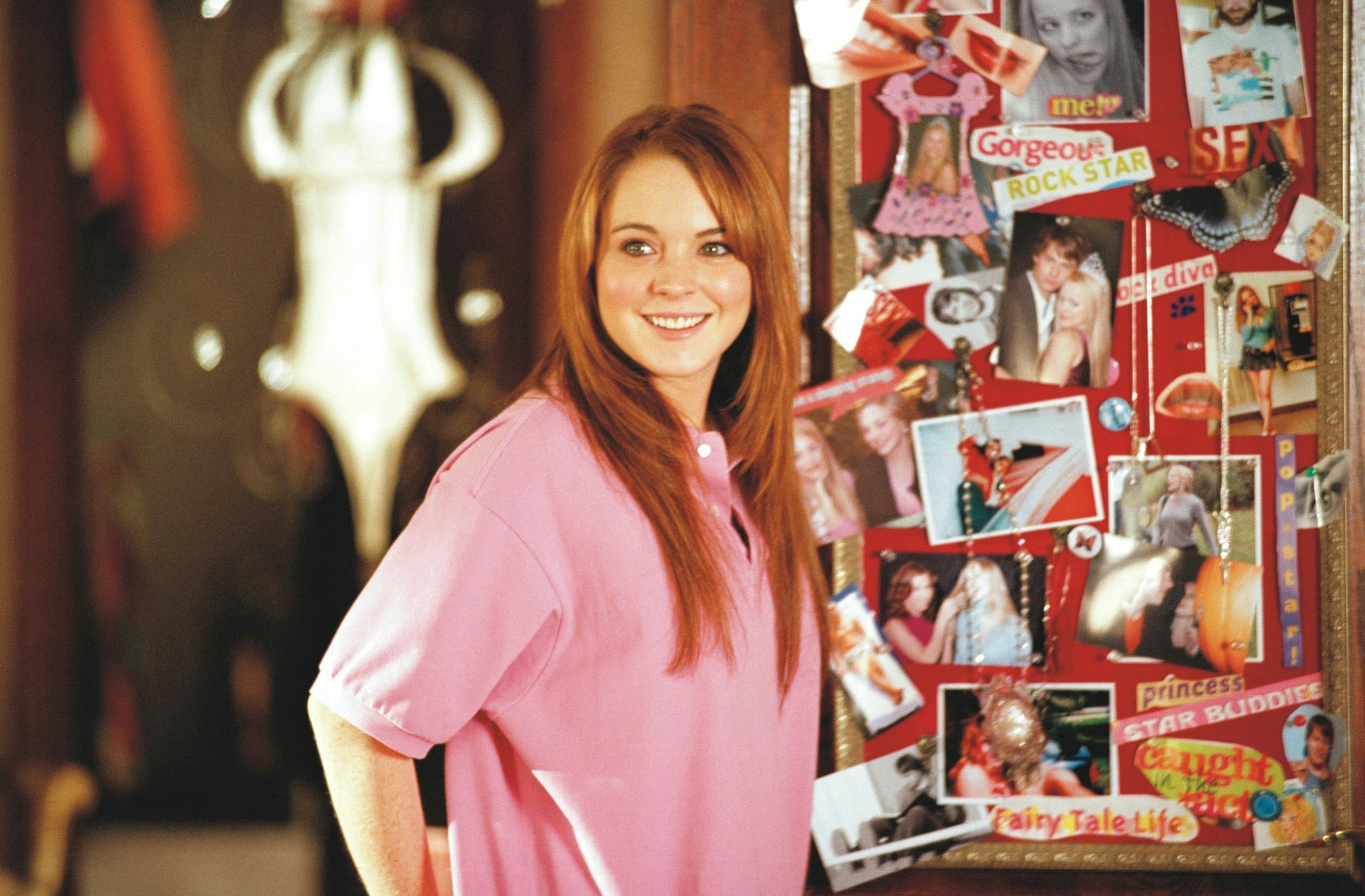
Today we’re going to be discussing costuming in coming of age films.
I’ve already written a blog post discussing the other aspects of coming of age films so go check that out if you haven’t already.
Without further ado, let’s get started.
So as you already know (hopefully), costume design is a hugggggeeee part of film and developing the tone within the narrative world. It can all be used to hint or illustrate a characters social status and/or personality.
This is very important in coming of age films since we need to present them as innocent and naive in the beginning and than watch them grow and evolve throughout the film. This is usually done through costuming and events like piercings, tattoos, makeovers, etc.
Ex: As we can see here, the large baggy clothing used in the first photo is meant to establish a sense of unfamiliarity and awkwardness. In this case, it is Cady's unfamiliarity with fashion that is later addressed by the "Plastics".
The second photo marks a shift in Cady's character as she goes from looking her age to dressing more mature and finding herself in a way.
A lot of costumes in the CoA genre usually follow a pretty authentic/nostalgic style that relates to the theme and time era of the movie. The costumes in these movies are also sometimes meant to purposely look bad or ‘try-hard’ to express the character’s attempts at being cool. Most of the costumes in this genre are usually vintage pieces or have that thrifty aesthetic to them.
These costumes typically use stylistic choices to reflect identity and color to represent the emotional state of the character. Costumes are sometimes also used to represent events like funerals, weddings, dances, etc. Basically, anything that would have a significant impact on the characters life and situation.
A really good way of explaining this would be to reference movies like Juno or Superbad. In these films the costuming very much represents their social status and that sort of 'try-hard' style I was talking about.
You can see in these examples that their clothes are either too baggy, too tight, or just don't look right. And honestly, are just not the most flattering. These were deliberate choices made to express awkwardness and helps to communicate their journey to finding themselves.
On the other hand, costuming can also express maturity or self expression and illustrate the characters identity and personality traits.
Some examples of this would be characters like Cher from Clueless and Katniss from the Hunger Games. While they are two very different characters, their costumes tell a lot about themselves and their status in the narrative world. Cher’s bold use of colors and designer clothing tells us that she is confident, popular, and wealthy. While katniss’ neutral tones and sensible style communicates that she is reasonable and is a part of the lower social class compared to other districts like the capitol.
Furthermore, on top of these stylistic and aesthetic choices. CoA films typically gravitate towards warm color palettes as they reflect the emotions of nostalgia and help to visualize the character's emotional transitions throughout the film. Though these palettes may differ depending on the film and the situation, considering that colors reflect emotions and feelings (think of Disney’s Inside Out and its characters).
Overall, costuming is extremely important in all genres of film as it sets the tone, social status, emotional state, and time era of the film. And helps the audience to make inferences about characters, as well as give context to scenes.
Credit sequences are meant to identify the people and their contributions to the project, as well as help set the tone. They typically list the production company, main actors, editors, production designers, cinematographers, producers, writers, and directors.
Grease is about two teens from very different social groups that had a summer relationship. After reuniting at the same school, Sandy realizes that Danny may not be the man she thought he was. They both go through some serious character development as Sandy learns to fit in and Danny learns that there’s more to life than being the ‘cool guy’. The credit scene in Grease takes an interesting approach. Considering that most credit sequences you see in film are fairly natural and go unnoticed. With the one shown in this opening it takes the spotlight with its cool animation, song that relates to the animatic, and funny caricatures. The credit sequence helps to set the tone by presenting an upbeat vibe. It also helps to establish the time era by including iconic visuals like Elvis, swing dancing, etc. It also helps to introduce the characters. Since we see them in cartoon form getting ready for the first day back to school. It also begins to tell us about the two groups, the T-birds, and the Pink Ladies.
This film needs no introduction as I’ve referenced it several times in my last few posts. The credits sequence for this opening is fairly typical as the credits slide in and out of the frame. Unnoticed I might add as there’s so much more going on to pay attention to, and the matching colors to the background doesn’t exactly make them stand out.
The weird thing about this sequence is that unlike most credit scenes where they immediately show in the first few minutes, in this opening the credits were delayed and didn’t show up until after Cady arrived at the school. The color and font of the titles also adds to the overall vibe of the piece and helps to set an upbeat tone.
This film takes a more serious approach to the CoA genre as we follow an introverted freshmen navigating through high school (notice a pattern here?). Charlie befriends two outgoing seniors that help to teach him about love, life, and high school. But as his friend prepare to go to college Charlie has to face his dark past. He does this by writing letters to an anonymous friend.
This credit sequence is different from your typical credit scene as it uses diegetic sound and immediately immerses you into the narrative world. The credit sequence is displayed in a type writer font and features the sound and visuals of someone typing the credits. The scene then continues to fade in and out of different titles as the background changes to a tunnel. We don’t know it yet but these two details are extremely significant to the story and the characters journeys throughout the film. The credit sequence takes a more noticeable route with the interactive feature of the typing rather than scattering the titles about and letting them go unnoticed.
The scene opens from a low angle, looking up at two adults handing you a lunch bag and talking to you about your first day of school like a little kid. The scene then tilts up, almost likewe’re growing and then cuts to an over the shoulder shot to reveal the girl they were talking to. Upbeat music plays as the teenage girl gets together to take a photo with her mom. A dialogue than kicks in from Cady’s point of view, it’s a voiceover that explains how old she is (16),why her parents are so excited, and that she was homeschooled up until now. The scene then features a variation of stereotypical expectations for homeschooled kids. The excerpt shows photos of Cady and her parents in Africa and explains that they’re zoologists that spent the last 12 years there. The scene then cuts back to the present of Cady getting dropped off at school and almost getting hit by a bus (foreshadowing for later events). Spunky music then begins to play as we see Cady struggling to navigate through the school. The scene then illustrates an unfamiliar atmosphere of rowdy students and Cady’s struggle to fit in. We also see a variety of different scenes of Cady getting into trouble for not knowing school etiquette and the opening ends with a zoom/ fade editing technique into the bathroom stall where we see Cady eating all alone.
This opening focuses on establishingbackground and developing the character.
This is done through the use of dialogue in the form of voiceovers, interactions with other people, mise-en-scene, and the use of photos.
This opening is perfect for the genre as it features editing, camera techniques, movement techniques, mise-en-scene, and visual elements that reflect the style. The content of this film is also an almost stereotypical coming of age type film as we have a girl going through the process of being in a new school and not fitting in.
In the very beginning of the excerpt there’s a very smart use of camera movement as the angle changes with the use of a tilt and creates this almost growing effect. This choice is perfect for a CoA film as it foreshadows the storyline in a metaphorical way. By adding this effect, it hints at Cady growing up and going to high school. However, it’s also contradicted by the tone and demeanor that her parents used when talking to her.
This in and of itself plays a crucial role in the genre as we can clearly see that Cady is childish and naive as she has never been to a real school before.
We hear about how overwhelmed she is and can see it in the shot where she’s passing between classes as we see a very crowded shot with people walking Infront of the camera. Featuring her almost drowning in the crowd as she says, “The first day of school was a blur, a stressful surreal blur.” We also see her naivety in her demeanor, such as when she didn’t look both ways before crossing the street (an almost childlike behavior). Or when she automatically assumes that the table of black students speaks a language from Africa.
Moreover, the montages used in this opening of Cady, getting into trouble with a bunch of different teachers, helps to illustrate her struggle. And gives the school a sense of authority as we see the teachers from a low angle. The slow-paced editing of this also helps to communicate the feel of a day in high school and the stress and frustration that Cady is feeling. Not to mention, the zoom fade editing on the bathroom door works as a seamless connect to reveal that she has no friends andhas to eat in the bathroom stall. Not exactly ideal.
The music in the opening is also very upbeat and reflects the time era it is meant to be set in, helping to set the tone of the film. The excerpt also uses a mix of diegetic and non-diegetic sound to immerse the viewer but also to reflect her situation.
One last thing that I noticed about the opening was the use of color. When we’re at Cady’s home, the colors are very earthy and neutral,but when we get to school, we are surrounded by so many different colors. This suggests a mix of personalities and can be used as a sort of sensory overload for Cady as her life transforms from drab to crazy.
This excerpt opens to a spunky song and an almost montagelike sequence of Cher and her friends hanging out and being teens. Cher is very obviously your average teen in the sense that she likes to shop and hang out with her friends. However, Cher immediately comes off as very vain and carefree. A voiceover then comes in with Cher’s voice as she begins describing her life and reassuring the audience that she has a “way normal life”. This is clearly contradicted as we see her go through her hugeee house and use a supercomputer to dress herself for the day. When it comes to her father, Cher seems to act more mature, but immediately after she leaves, she goes back to being somewhat air-headed, and kind of whiny. It’s obvious that she’s used to getting her way. Cher seems to hold herself to a high standard when it comes to her social life and who she chooses to spend her time with. Which also supports the idea of her naivety.Because, while she thinks she’s acting mature by hanging out with popular friends, she seems more childish by involving herself in all the high schooldramas and cliches. The excerpt ends with her walking away from the crowd surrounding Dion and Murray. A guy then comes up to her, and she shoves him off and screams her catchphrase, “UGH! As if!”.
This opening focuses on establishing background and character.
This is done through voiceovers,dialogue, mise-en-scene, visual techniques, and auditory techniques.
Our main character Cher is introduced and immediately takes on the role of your stereotypical “dumb blonde”.Cher is very much what you expect to see from a coming-of-agemovie;she’s pretty, popular, rich, and extremely carefree. We can see this through her actions and dialogue that she has almost no true regard for other people around her. For example, when we see her driving to go pick up Dion, she hits a potted plant and runs over it without so much as a second thought. Cher is presented in the first couple minutes as what the title suggests, Clueless. At least when it comes to the real world.
The use of dialogue in this opening gives us a background as to Cher’s home life and how sheltered she is. The voiceovers also give us a sort of window into Cher’s inner thoughts; this helps to develop the character and allows us to see that she is shallow and vain.
The montage, like fast editing in this opening, helps to set the tone and tells us more about Cher’s lifestyle, and that she likes to party and lives a very glamorous life. The scenes also feature fun and spunky music that helps to set the mood and what era this takes place in (1990s).
This opening used a lot of mid shots, long shots, and two shots to help set the scene, illustrate the background, and communicate dialogue. This helps the viewers to see how everyone fits into the narrative world and gives you an idea of the role they’ll play in the story.
Furthermore, the makeup, costumes, and overall set design of this excerpt are great for expressing the characters and giving context to the film. Just by looking at Cher and her friends we can tell that they are very posh and probably havemoney to spend. The bright colors in this also help to catch the viewers' attention and bring light to the idea that Cher lives a very carefree and happy life. Not because she doesn’t have troubles, but because she just chooses to ignore them.
This opening lands on the more dramatic side of the CoA spectrum, but it still contains the main plot points.
This opening starts with a midshot of Ponyboy sitting at his desk beginning to write a story as the camera slowly zooms on his face and then zooms into the page. The use of diegetic sound helps to immerse the audience as the non-diegetic voiceover starts up. We see Ponyboy walk out of the theatre by himself with only two things on his mind “Paul Newman and a ride home.” He stands in the mirror imitating a character (likely from the movie he just saw). We then see a series of mid and long shots illustrating a group of rich kids bullying and assaulting him. At first, Pony kind of brushes it off and plays with a red ball from his pocket. It wasn’t until they started chasing him down that Pony started running, and they attacked him, cut off his hair, and pulled a blade on him. Closeups are used during this fight scene to illustrate emotion and create a personal atmosphere. We then see the rest of Pony’s gang show up and drive the guys off. When they go to check up on Pony, he is shown from a high angle as he cries, showing that he has lost control. A series of dialoguethan tells us that Pony was just trying to walk home from the movies, even though he knew he shouldn’t be going out alone. The opening then ends with the gang all huddled together; this scene really shows the closeness between the characters even though they may fight amongst themselves.
This opening focuses on developing conflictsand backgrounds.
The music and auditory techniques usedin this opening scene are crucial to developing the story and setting the tone as it transforms from playful to more serious, a reflection of his situation.
Not to mention, the use of dialogue in this excerpt works as a flashback/ natural introduction to the story and gives us an idea of what is going on in the character’s head. Further developing his character and setting up the story.
Like all the other openings I’ve assessed so far, the character is introduced as innocent and naive.
Ponyboy reflects this convention because he is not aware of his surrondings and only cares about “movies and books”. Though Ponyboy clearly doesn’t live the life of your average teenager, he still has the interests of a young boy.
The use of visual techniques in this excerpt, especially the use of zooms and long shots, helps to set up the story and capture the action taking place in the narrative world.
The opening tells a lot about the character and the situation he is in.We know that he is being raised by his older brothers, he’s a part of a gang, and that he doesn’t really think before he acts.
What makes this opening more dramatic as opposed to the other ones is the use of close-up shots during the fight with the rich bullies. This creates a personal and tense atmosphere and makes the viewer feel badfor Ponyboy as we are forced to pay attention to the pain he’s enduring.
Similarly to the other openings, The Outsiders uses color theory and costume design to communicate a message and tell the audience what time the story take place in. For example, the cuffed jeans and greased hair heavily allude to styles belonging to the 1950s- mid 1960s era. The way they are dressed compared to the rich kids also tells us that they are not wealthy. This idea is later supported when we see what kind of neighborhood Pony lives in.
Overall, what I’ve gathered from my research is that while the story and plot lines can vary drastically, they still maintain the key characteristics of:
Using music to establish the tone
Presenting the character as naive/ innocent
Establishing background through the use of dialogue and mise-en-scene
Using color theory to communicate a character type, message, or era
Almost montage like editing styles/ medium to slow paced editing